El Vermut
The 10 Commandments of Vermouth: The Sacred Ritual of the Spanish Aperitif
Discover the 10 sacred rules for drinking vermouth the Spanish way. From the Sunday aperitif to the perfect vermouth hour, here’s everything you need to know about this national ritual.
2026-04-18
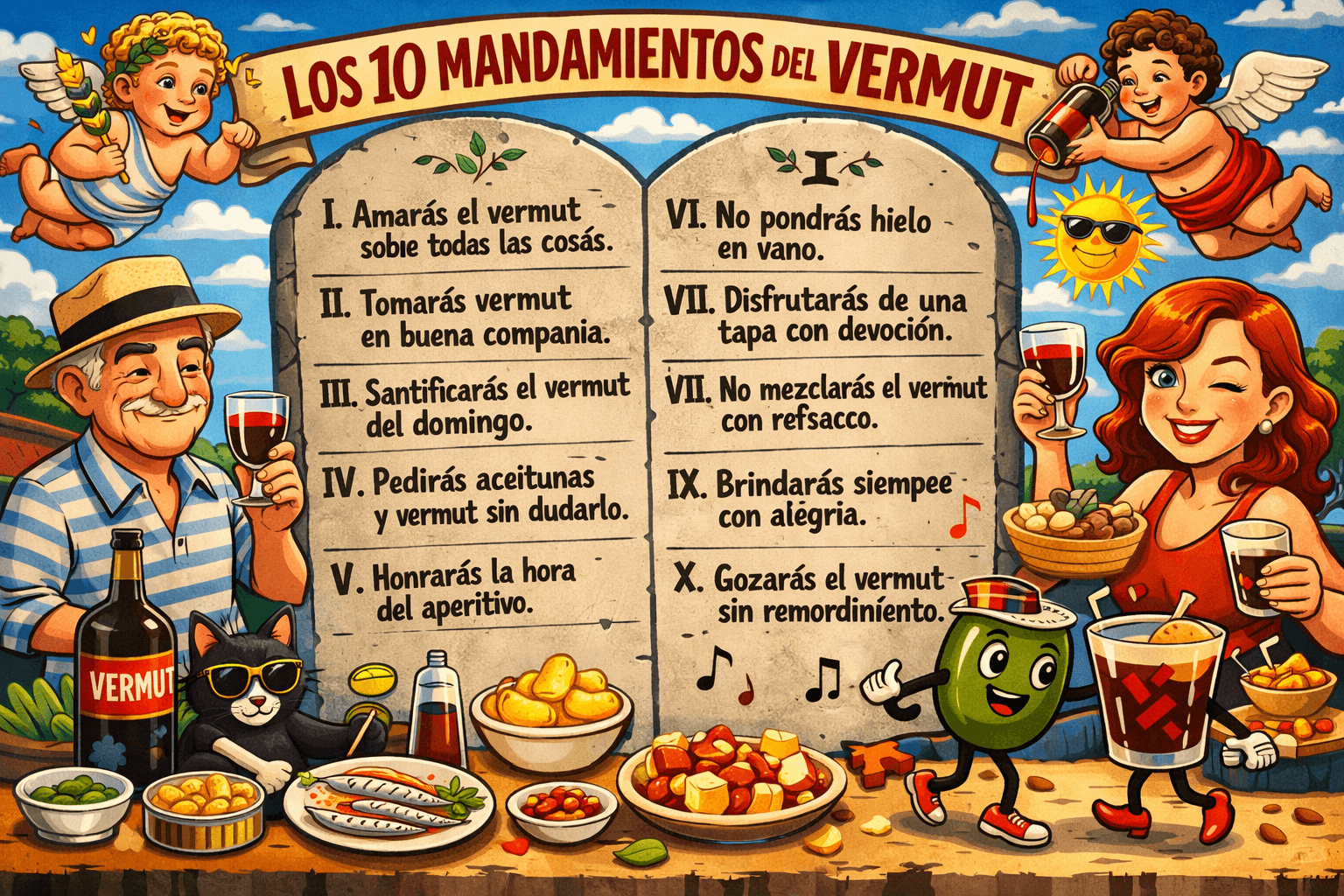
Before the stew, before Sunday rice, before the after-lunch chat and the match: there is vermouth. It’s not just a drink. It’s an institution. A Sunday ritual, a bar culture classic, a slow aperitif moment that lives on in countless Spanish bars, from neighbourhood taverns to historic counter bars and vermouth houses across the country. 🍸
If you want to drink vermouth properly —with knowledge, with pause and with all its elements— these are the 10 commandments you cannot skip.
I. Honour Vermouth Hour Above All Else
Vermouth is not for any time of day. The Sunday vermouth hour is sacred, and so is the schedule: between 12:00 and 14:00. Not earlier —you haven’t worked up an appetite yet— and not later —because lunch takes over.
In Spain, "shall we have a vermouth?" is an invitation to that magical space between the calm wake-up of Sunday and the family table. Good bars know it well: the best places in Madrid, Barcelona, Seville or Zaragoza only serve vermouth in that late-morning Sunday and holiday slot.
Associated keywords: vermouth hour, Sunday vermouth, Spanish aperitif, when to drink vermouth
II. Never Drink Vermouth Without Pintxos and Tapas
Vermouth without tapas is incomplete. In Spanish aperitif culture, the glass always comes with something to nibble. Classic vermouth pairings include:
- Anchovies in vinegar or oil
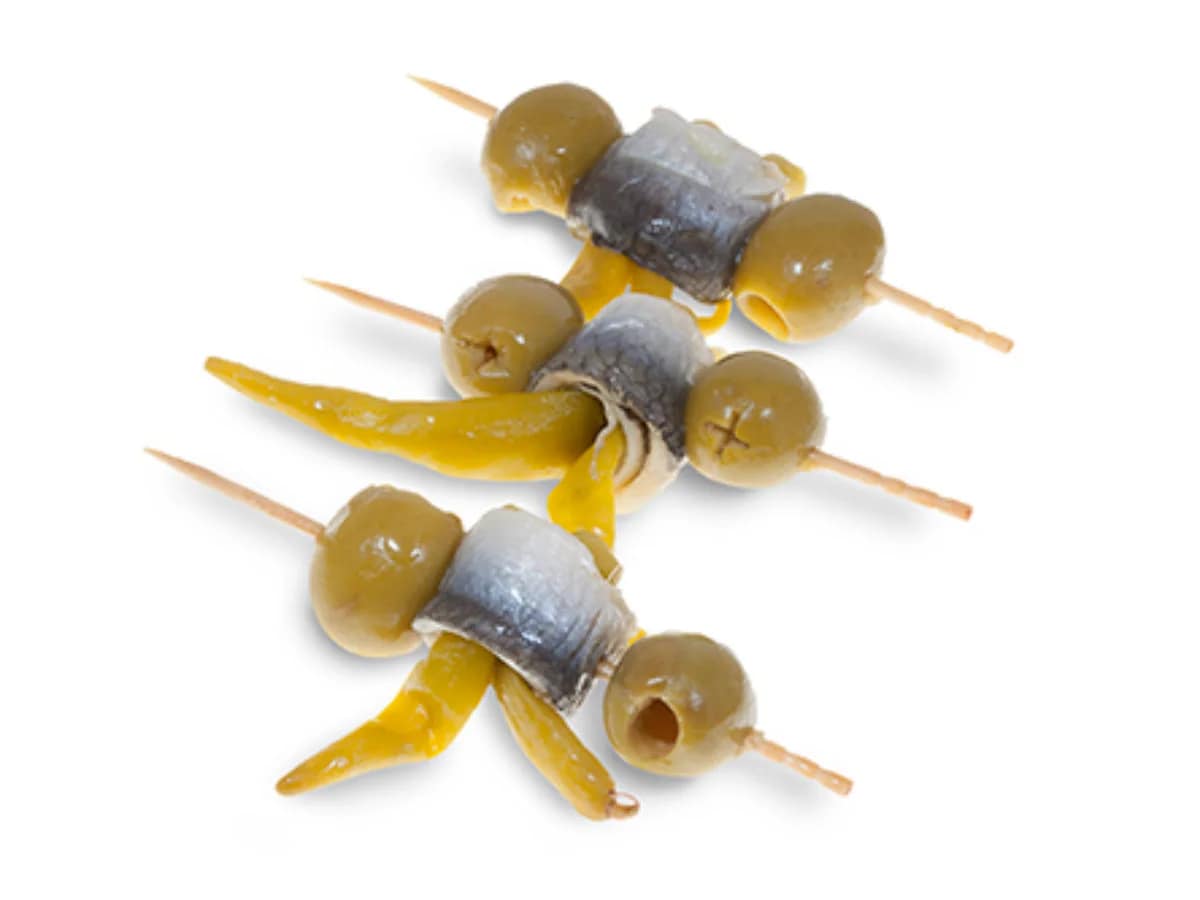
- Olives with anchovy or manzanilla
- Pickled mussels (ideally from a tin, served on the tin itself or on a small plate)
- Banderillas with gherkin, chilli pepper and pearl onion
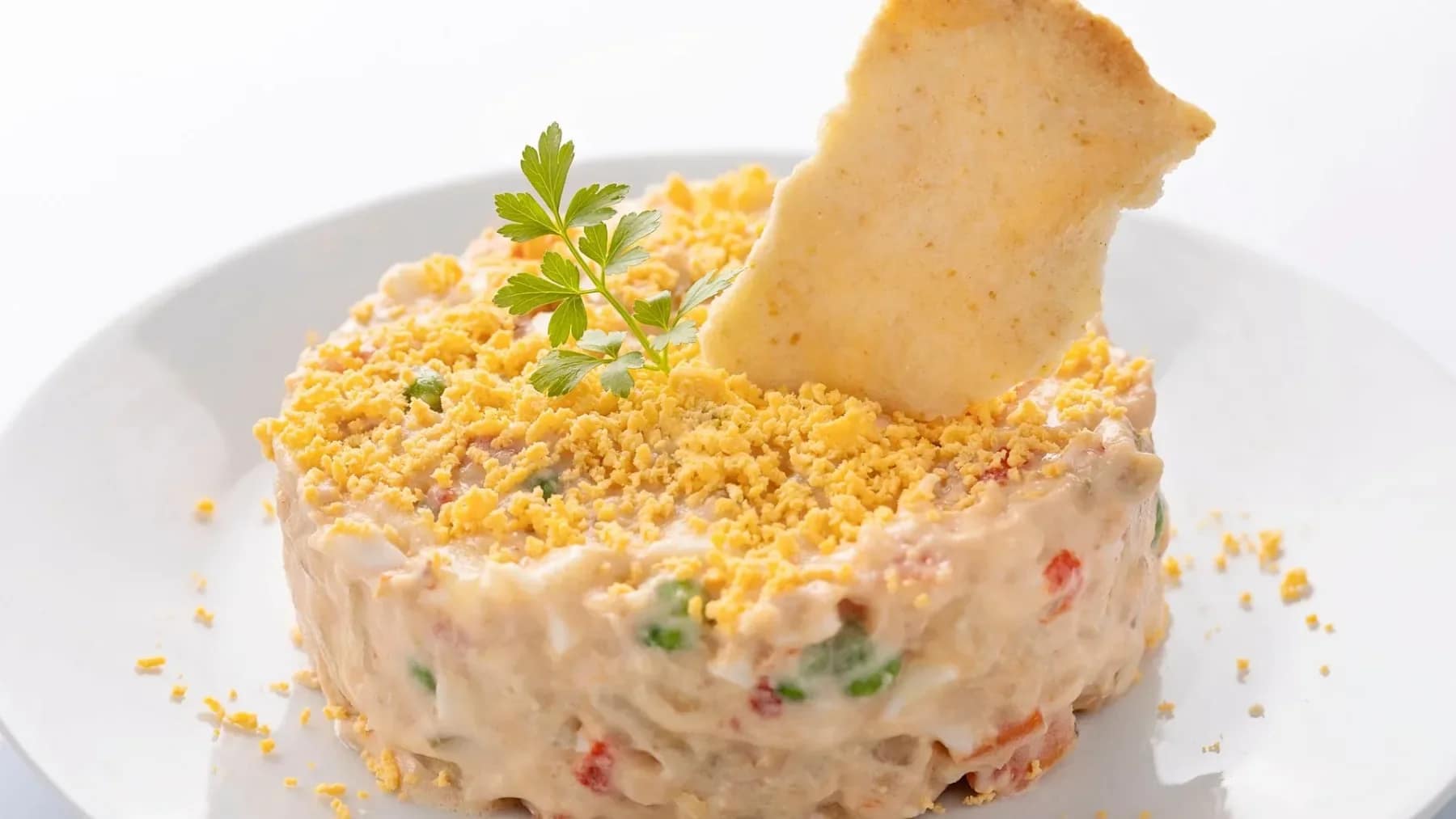
- Patatas bravas with proper brava sauce, not ketchup-mayo
- Ham croquettes freshly fried
In some parts of Spain —Andalusia, Castile— the tapa arrives without asking. In others, you have to point to the display case. Either way: not ordering something to share while drinking vermouth is a small act of culinary sacrilege.
Associated keywords: vermouth tapas, aperitif pairings, anchovies in vinegar, vermouth pintxos
III. Respect the Right Glass
Vermouth deserves its own glass. Not a wine glass, not a highball glass, and certainly not a balloon glass. The canonical choice is the vermouth glass: wide, low, thick glass, also known as a short balloon or low tumbler. In many historic tapas bars, it may be served in a tall shot-style glass or even a cava glass if the house wants a more refined touch.
Tradition says vermouth should come with plenty of ice, a splash of soda siphon, and a slice of orange with peel —or an olive on a pick.
Depending on the style:
- Red vermouth: with orange and soda siphon
- White vermouth: with lemon and no soda, sometimes on its own
- Dry vermouth: served neat in a small glass, as in old Madrid taverns
Associated keywords: how vermouth is served, vermouth glass, vermouth with soda, vermouth with orange
IV. Remember That Spanish Vermouth Comes From Here
Here’s a commandment many people forget: vermouth belongs to us too. Or almost. Although the historical roots of modern vermouth go back to 18th-century Piedmont in Italy, Spain has been producing its own distinctive vermouth for more than 150 years.
The great Spanish vermouth capitals are:
- Reus (Tarragona): considered the world capital of vermouth. The city exported vermouth around the world from the mid-19th century. Brands such as Yzaguirre, Miró and Primitivo Quiles have been making vermouth in Catalan lands for generations.
- Bajo Aragón: artisanal vermouths from Alcañiz and surrounding areas, influenced by Matarraña wines.
- Valencia: with the tradition of draft vermouth in neighbourhood bars, cold and generous.
- Madrid: not a producer, but a city that made vermouth its own through an unmatched tavern-and-counter culture.
Spanish vermouth has its own personality: more botanical intensity, more structure, less sweetness than Italian styles. Drinking Spanish vermouth in Spain is not snobbery: it’s consistency.
Associated keywords: Spanish vermouth, vermouth from Reus, draft vermouth, origin of vermouth in Spain, best Spanish vermouths
V. Never Drink Vermouth in a Rush
Vermouth is a way of life. The opposite of takeaway coffee. Traditional vermouth bars —with sawdust floors, barrels on the wall or a worn zinc counter— have spent decades teaching that aperitif time should be taken slowly.
At least one hour. With conversation. With pauses between sips. With eyes on the football pitch, the match, or a folded newspaper. With the second vermouth arriving unasked because the bartender already knows.
In counter-bar culture, the bar is a democratic space: you chat with the upstairs neighbour, the retiree on the regular stool, and the child who comes with their grandfather to learn the art of slow living.
Associated keywords: vermouth culture, counter bar vermouth, slow Spanish aperitif, Sunday vermouth tradition
VI. Never Speak the Name of Industrial Vermouth in Vain
Not all vermouths are created equal. This commandment asks you to tell the difference. There is bulk vermouth, house-brand vermouth or carton vermouth served by unscrupulous bars. And then there is vermouth made with care: macerated with real botanicals, aged in barrel, using recipes passed down through generations.
Signs you’re looking at real vermouth:
- It comes from a barrel or the bar’s own tap system
- You can read the bottle label if you ask
- The bartender knows where it comes from and how it’s made
- The price-to-quality ratio is honest (don’t pay €8 for carton vermouth with a slice of orange)
More and more vermouth bars in Spain are betting on artisanal, local vermouth. Look for venues offering a vermouth list with origin, vintage and flavour profile. Like wine, vermouth deserves that level of attention.
Associated keywords: artisanal vermouth, barrel vermouth, vermouth bar, best vermouths in Spain, draft vermouth
VII. Do Not Steal the Turn to Order at the Bar
The seventh commandment is not about drinking: it’s about behaviour. The counter of a Spanish aperitif bar has its unwritten rules. The most important one is respecting the queue.
In busy vermouth bars —and the good ones are always busy on Sundays— the counter is a space of silent coordination. The bartender sees everything. Whoever has been waiting longest gets priority. Raising a hand, resting a bill on the counter or simply giving the "I’m next" look are all part of the non-verbal language of the Spanish bar.
And while we’re on vermouth etiquette: don’t complain if service is slow, don’t keep changing your order, and always say thank you when the tapa arrives. This is bar culture, and it’s part of the ritual just as much as the olive.
Associated keywords: bar etiquette, Spanish bar culture, how to order at the bar, aperitif customs
VIII. Do Not Confuse Vermouth with a Gin and Tonic
Eighth commandment, and a serious one: vermouth is not a modern aperitif trend. It doesn’t compete with the gin and tonic, the Negroni or the Spritz. It’s not a fad. It’s a centuries-old tradition with its own rules, timing and aesthetic universe.
Vermouth is low in alcohol (around 15–18% ABV), aromatic, complex and perfect for opening the appetite. By definition, it is a botanically aromatised wine with wormwood (Wermut in German) and more than 30 botanicals among herbs, roots, flowers and spices.
It is not mixed with energy drinks. It does not need a metal straw. It does not come with an Instagram card. It comes in a glass with ice, soda and orange, on a wine-stained counter, with a plate of olives beside it.
Associated keywords: what is vermouth, vermouth vs gin and tonic, vermouth vs aperitif, vermouth alcohol content
IX. Do Not Bear False Witness Against Tinned Vermouth Snacks
Ninth commandment, and a defence of the misunderstood: pickled mussels in a tin are sacred. So are cockles, clams, plain cockles, and squid in its own ink. Spanish tinned seafood is gastronomy, not a compromise.
Some of the world’s best preserves come from Galicia, the Cantabrian coast and the Mediterranean. Opening them straight from the tin —with their oil, brine or escabeche— and eating them with a toothpick while sipping vermouth is one of the most honest and perfect rituals in Spanish food culture.
Vermouth bars with tin counters are enjoying a well-deserved renaissance. Paying €4 for a good tin of cockles with vermouth is one of the greatest pleasures within reach of almost any budget.
Associated keywords: tinned seafood with vermouth, pickled mussels, vermouth pairing, cockles with vermouth, Spanish preserves
X. Love Vermouth as Yourself, and Share It
The tenth commandment is the most important: vermouth is collective. It is not drunk alone. Or if it is —and sometimes it is— it’s at the bar, with the bartender as your conversation partner.
Vermouth is conversation. It’s the "how’s the family?" question that rarely appears at any other time. It’s the child tasting their first sip from grandad’s glass and making a face. It’s the spontaneous Saturday plan that turns into four extra hours because no one wanted to leave.
Sharing vermouth means sharing time without screens, without schedules, without urgency. It is the quintessential Spanish pause. And if you pair it with a good artisanal vermouth, a bar with history and a proper tapa, there’s nothing more to ask for.
Love vermouth and recommend it to anyone who hasn’t discovered it yet.
Associated keywords: vermouth with friends, Spanish aperitif culture, vermouth and Spanish food, Sunday plans in Spain
The Vermouth Ritual, in Brief
| Commandment | Essence |
|---|---|
| I. The hour | Between 12:00 and 14:00, ideally on Sunday |
| II. The tapa | Anchovies, olives, mussels, banderillas |
| III. The glass | Low glass, ice, soda, orange or olive |
| IV. The origin | Spanish vermouth, ideally from Reus or artisanal |
| V. The pace | No rush. At least one hour |
| VI. The quality | Real vermouth, not bulk stuff |
| VII. The etiquette | Respect the bar queue, be polite |
| VIII. The identity | It’s not a gin and tonic. It’s vermouth. |
| IX. The tin | Spanish preserves are high gastronomy |
Where to Find the Best Vermouth in Spain
If you want to explore the world of vermouth with every guarantee, at guiavermut.com you’ll find:
- The best vermouth bars and aperitif venues by city and province
- A guide to Spanish artisanal vermouths with ratings and flavour profiles
- The perfect pairings for each vermouth style
- The history and producers of the world capital of vermouth: Reus
Because vermouth is not just what’s in the glass. It’s everything around it.
Did you enjoy this guide? Share it with anyone who still doesn’t know how to drink vermouth properly.